A Head of Group Corporate HR found himself bitten by a relentless organisational bug – Headcount Optimisation, politely termed Resource Rationalisation, across nine group companies. In simple words, it meant reducing manpower. The board approved this initiative, championed by the newly appointed CEO.
The earlier CEO, widely regarded as a father figure across the group, stepped down and declined to be part of this intervention. Working under two CEOs with asymmetric and contrasting personalities made the situation even more complex and emotionally draining.
The six-month exercise of resource rationalisation was nothing short of a nightmare. It demanded difficult decisions, uncomfortable conversations, and the dismantling of teams that had once felt like family. Those months were filled with tormented, sleepless nights, and the emotional toll was profound.
The person navigating this storm—the Head of HR—was me. In the process, my sense of self and identity felt compromised. I carried the guilt for years, not just as a professional, but as a human being.
Many of you may have undergone, or may someday undergo, similar inevitable conflicts. This reflection is meant to offer perspective—on how identity, responsibility, and humanity collide, and how one might begin to navigate such inner battles with clarity and compassion.
The Formation of Identity: A Lifelong Journey
Identity begins early in life. Around 15 to 18 months, a child first recognises themselves in a mirror, marking the earliest spark of self-awareness. From there, the journey of selfhood unfolds and continues to evolve throughout one’s lifetime.
As we grow, recognition and validation from family, peers, and society shape our developing sense of who we are. These experiences influence how we behave, relate to others, and make choices in adulthood.
Identity is not a single trait but an integration of memories, experiences, relationships, and values. This blend creates a stable sense of self that endures over time, even as new dimensions emerge and become part of our personality.
Carl Jung describes this lifelong shaping of identity as Individuation – the movement from simple social adaptation to a unified, authentic self. It involves integrating the conscious ego with deeper layers of the personal and collective unconscious, gradually leading a person toward wholeness and inner alignment.
Navigating Identity Conflicts with Courage and Credibility
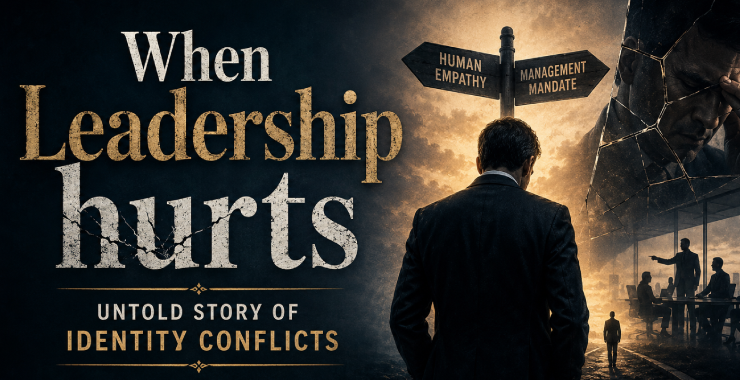
Within organisations, identity conflict is most visible in leadership roles. Leaders constantly balance two competing identities: human empathy and management enforcer. For many, this tension appears manageable; for others, it becomes deeply unsettling. In truth, the conflict is never just about tasks—it is rooted in values, authenticity, and credibility.
For most of us, our work identity becomes a defining part of how we see ourselves. It is no surprise that one of the first questions asked when meeting someone new is, “What do you do?” Yet beyond our professional roles, we also carry identities as family members, creators, athletes, gamers, and adventurers.
Each identity carries its own expectations and responsibilities. At times, these demands collide—creating what we call an Identity Conflict. In organisational life, this conflict becomes especially pronounced for leaders. They often stand at a crossroads: whether to support their teams or align with organisational mandates. In practice, this is rarely simple. A constant tug-of-war unfolds between conscious reasoning and unconscious drives shaped by one’s values, beliefs, and memories. Decision-making becomes a site of tension; attempts to “balance” both sides often intensify the strain.
What ultimately eases this conflict is authenticity. Authenticity builds credibility, and credibility becomes the foundation of trust. With trust, leaders gain the strength to negotiate, articulate, and communicate effectively—upward and downward—without losing themselves in the process. Identity conflicts are inevitable, but when leaders navigate them with clarity and authenticity, they transform tension into maturity—and conflict into credibility.
Courage and Credibility
Refusing to become a puppet of organisational pressure requires courage. Once a leader establishes that they act from values, expectations are set—they will not diverge from their principles. This consistency earns respect and trust, even when decisions are unpopular.
Difficult situations—such as layoffs, restructuring, or disciplinary actions—test this balance. The way leaders mitigate the human impact defines their professional identity. How we handle these shocks strengthens long-term relationships and reinforces credibility. Leaders who manage these moments with empathy are remembered not for the decision itself, but for the dignity with which they carried it out.
The Larger Lesson
Identity conflict in leadership is not a weakness—it is a sign of awareness. Leaders who recognise this inner tension are better equipped to navigate it. The goal is not to eliminate conflict but to transform it into balance. When leaders stand firmly on their
values, they create a culture where authenticity thrives, credibility deepens, and both management and teams feel genuinely represented.
In essence, identity is formed early yet refined continuously. It is a dynamic, evolving narrative shaped by our inner world and outer experiences – guiding how we live, connect, and grow as leaders and as human beings.